Latest
Case
Studies
Underground Mine Microseismic Monitoring
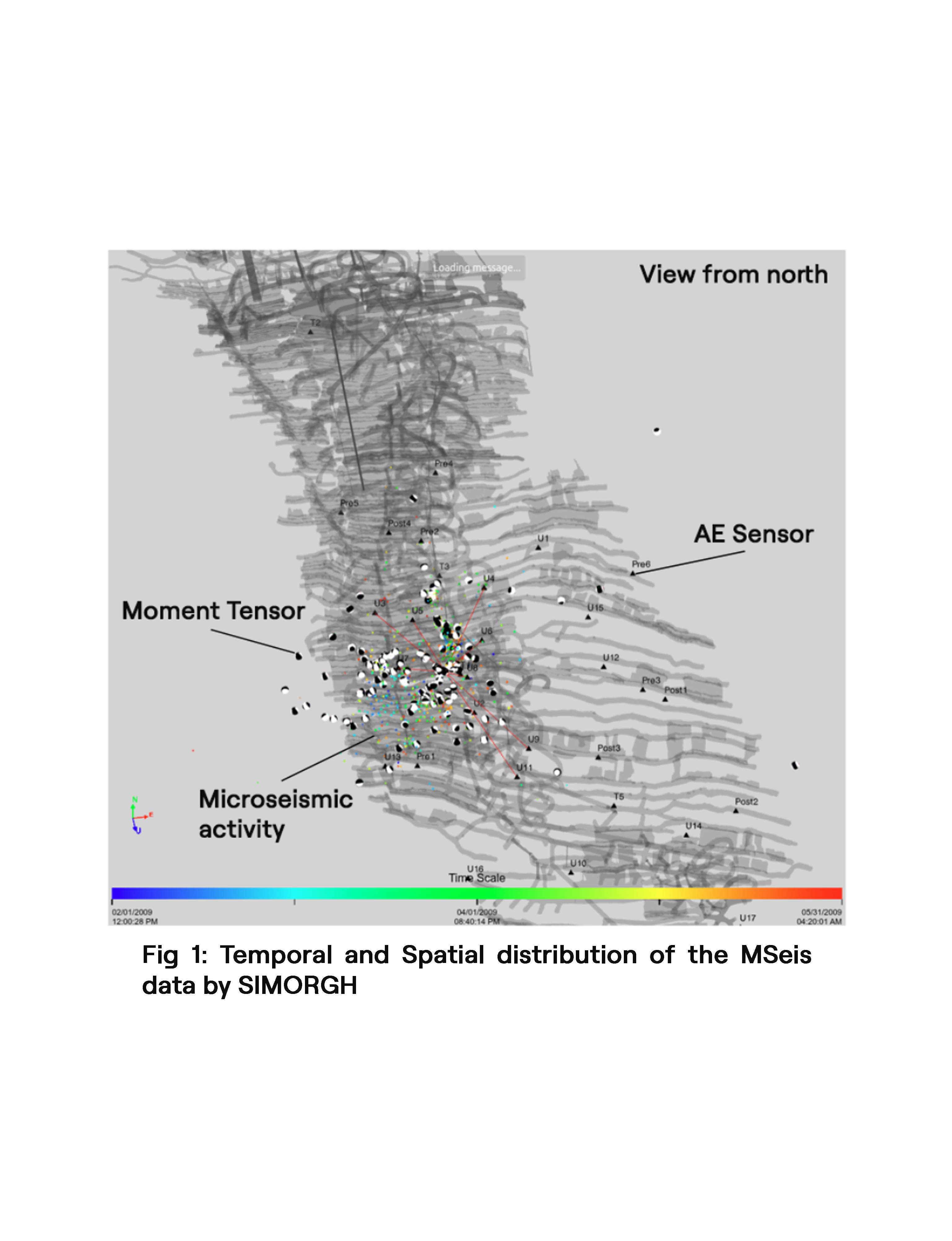
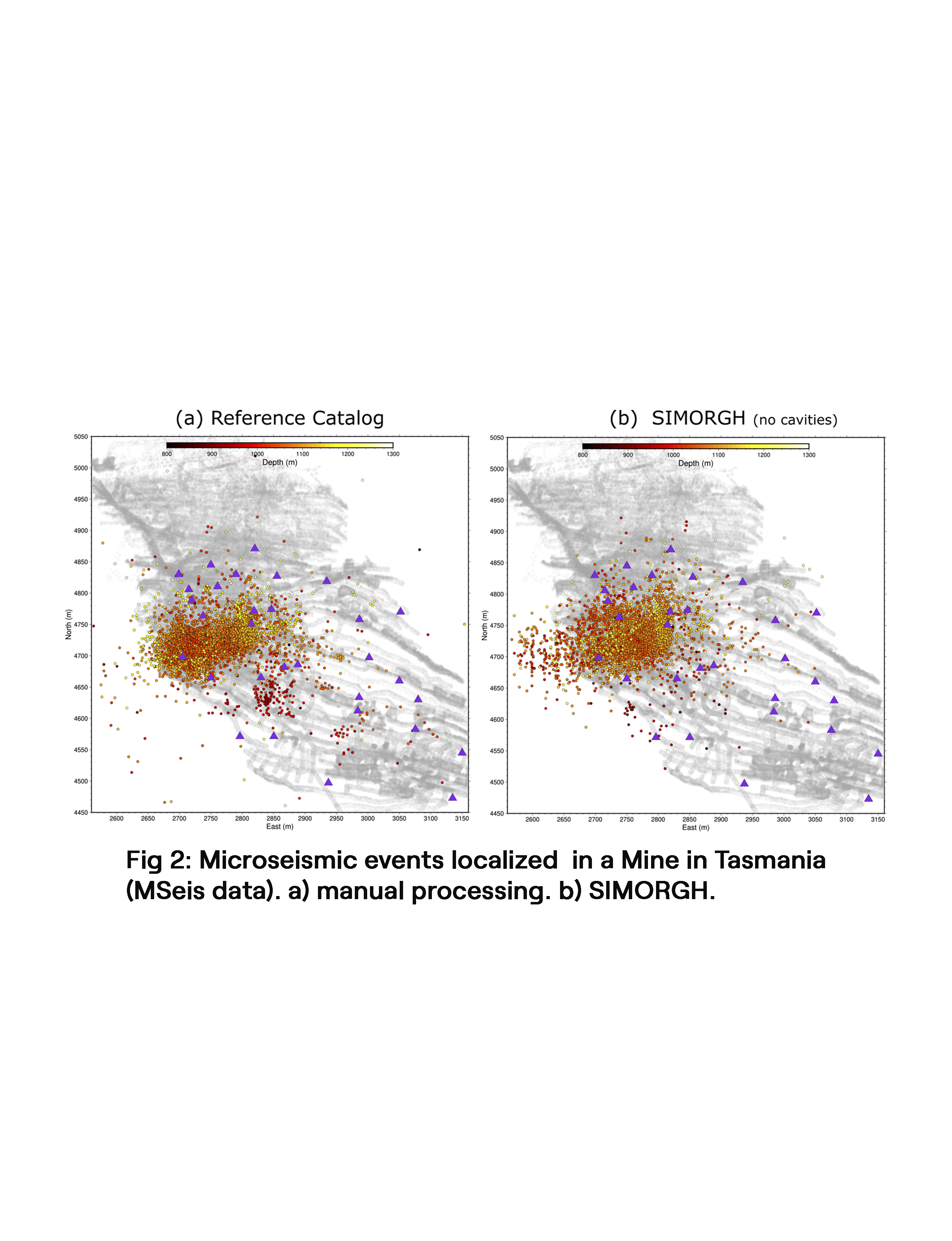
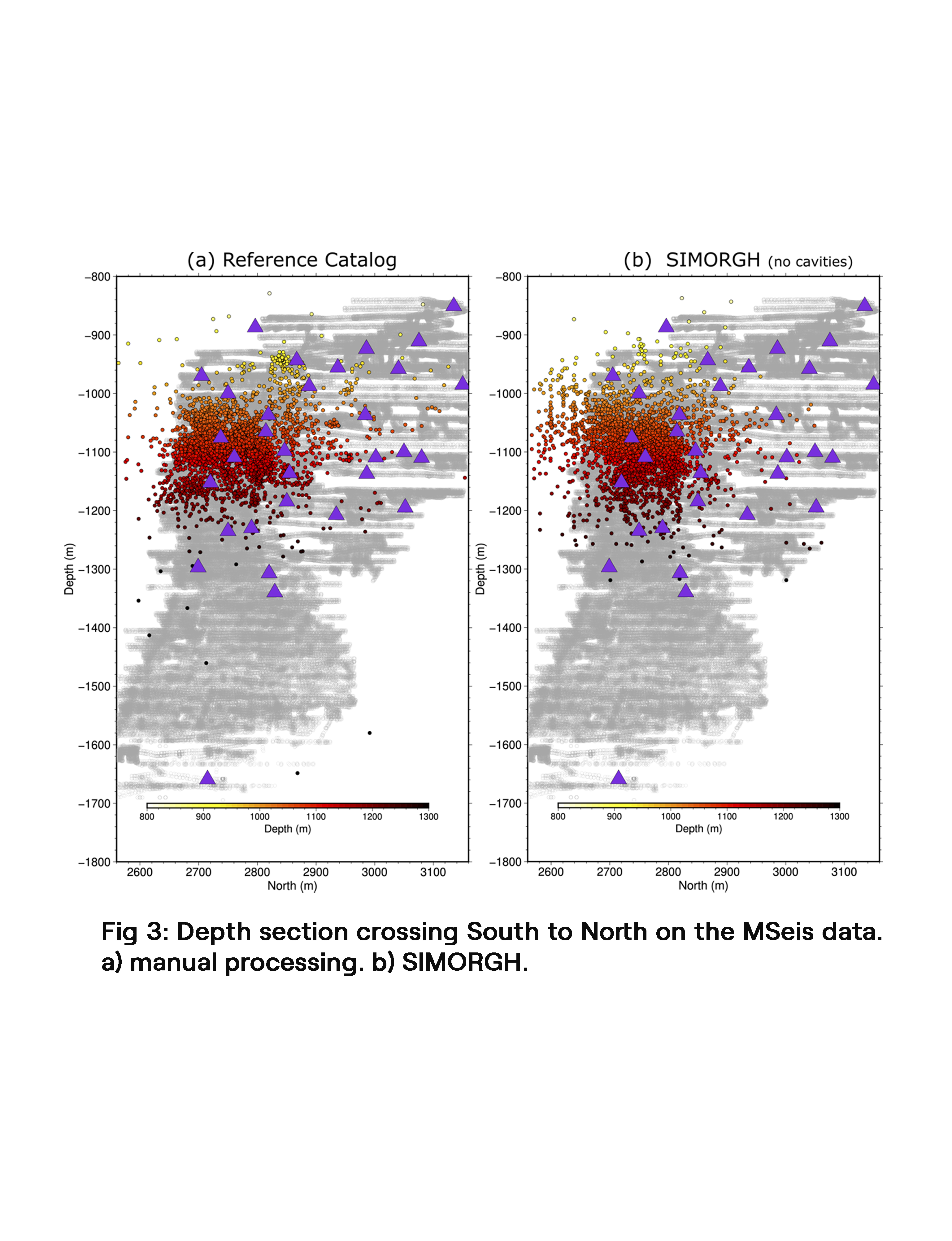
This case study demonstrates SIMORGH's automated microseismic (MSeis) monitoring in an underground mine in Tasmania, Australia. A network of 32 seismic stations (27 single-component and 5 three-component geophones) monitored mining-induced seismicity to depths of ~1,800 m. Processing one full year (2008) of trigger-based data, SIMORGH automatically localized more than 6,000 events in approximately 8 hours using 12 processors. The system identified a previously undetected seismic cluster in the western part of the mine that was absent from the manually produced reference catalog, highlighting its enhanced sensitivity and reliability.
 Continuous or trigger-based microseismic waveforms (kHz sampling), station geometry, an approximate velocity model.
 Fully automated event detection, phase picking, and hypocenter localization; rapid processing of large datasets.
 Thousands of events localized in hours, enabling timely decision-making for mining operations.

Laboratory-Scale Fault Reactivation Monitoring
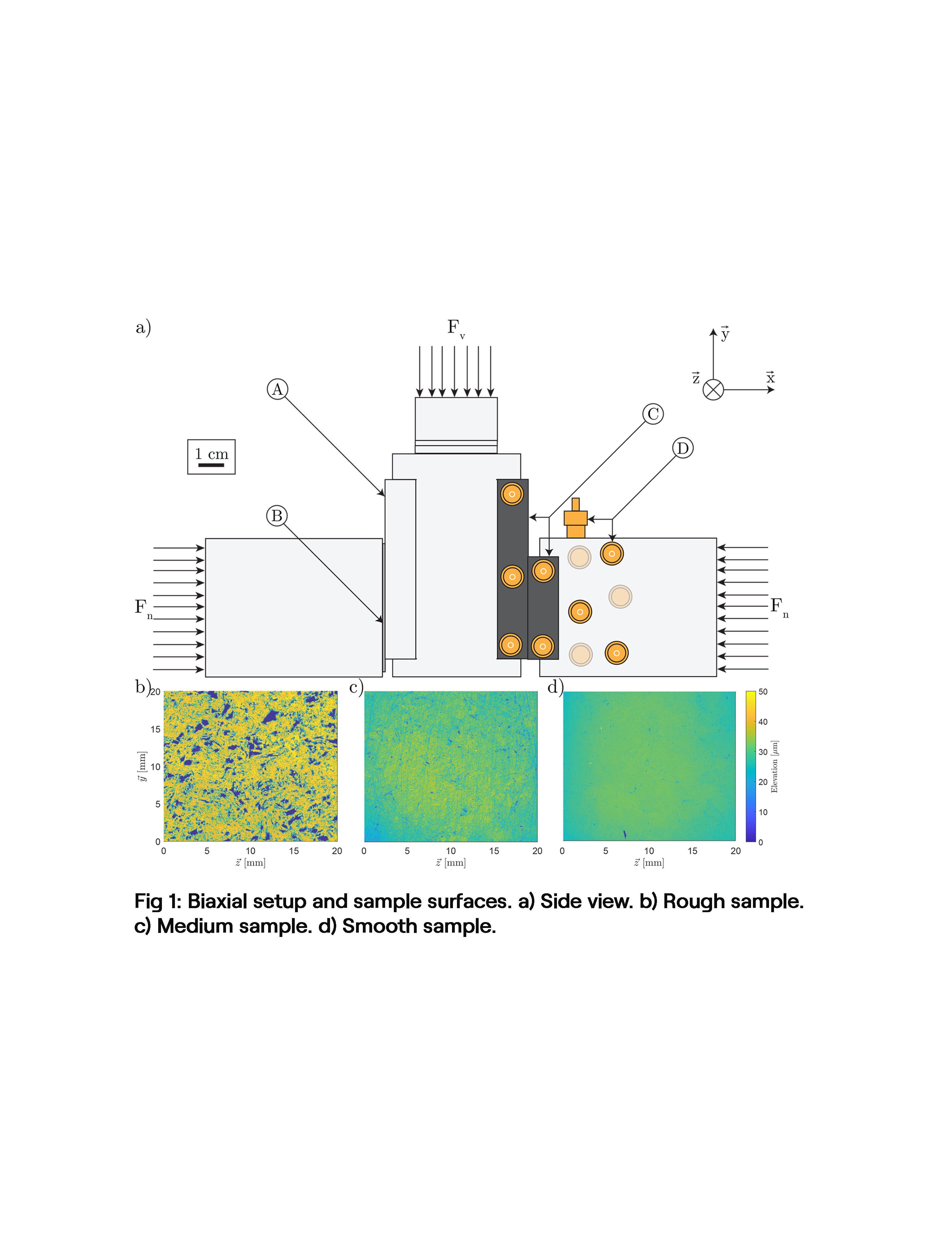
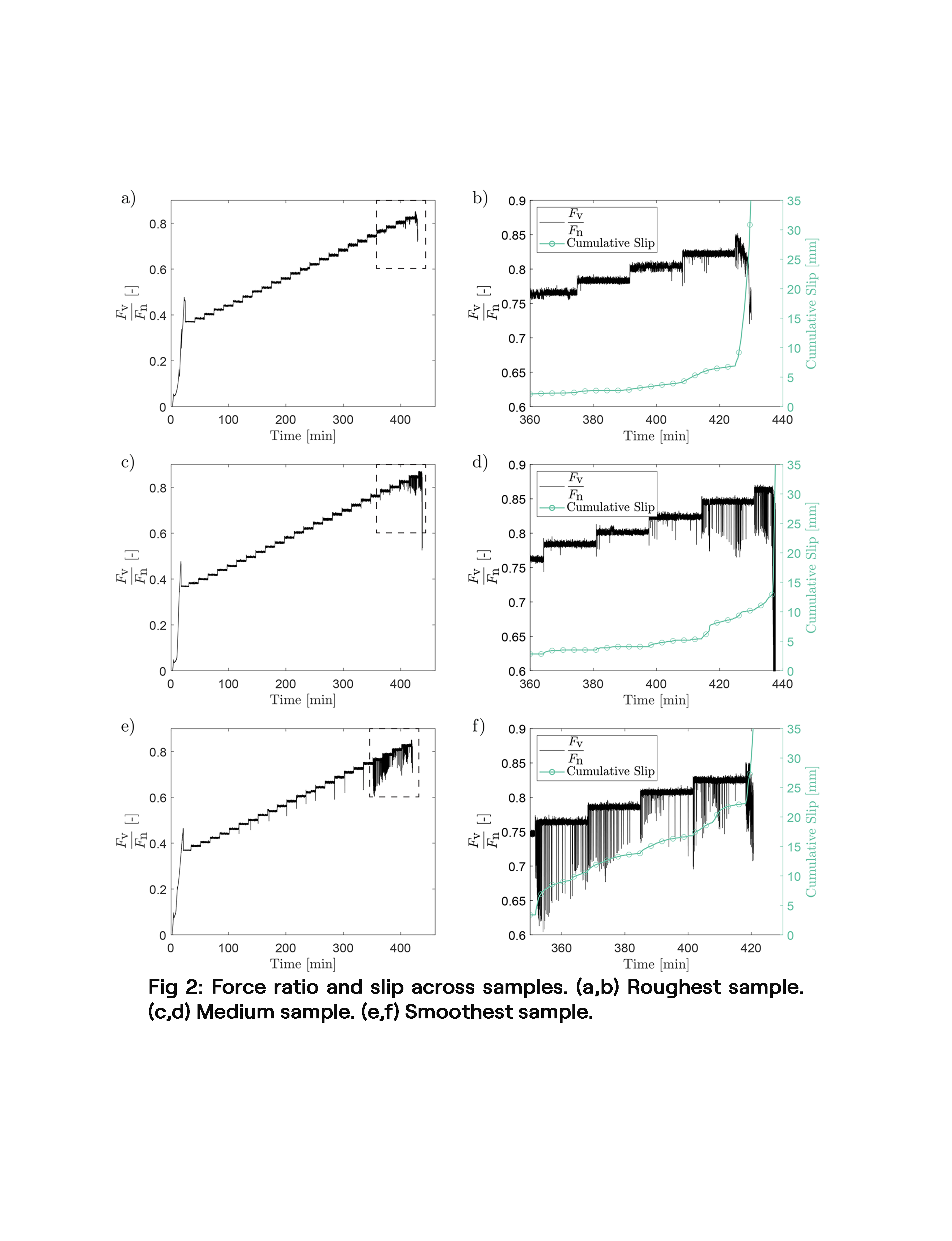
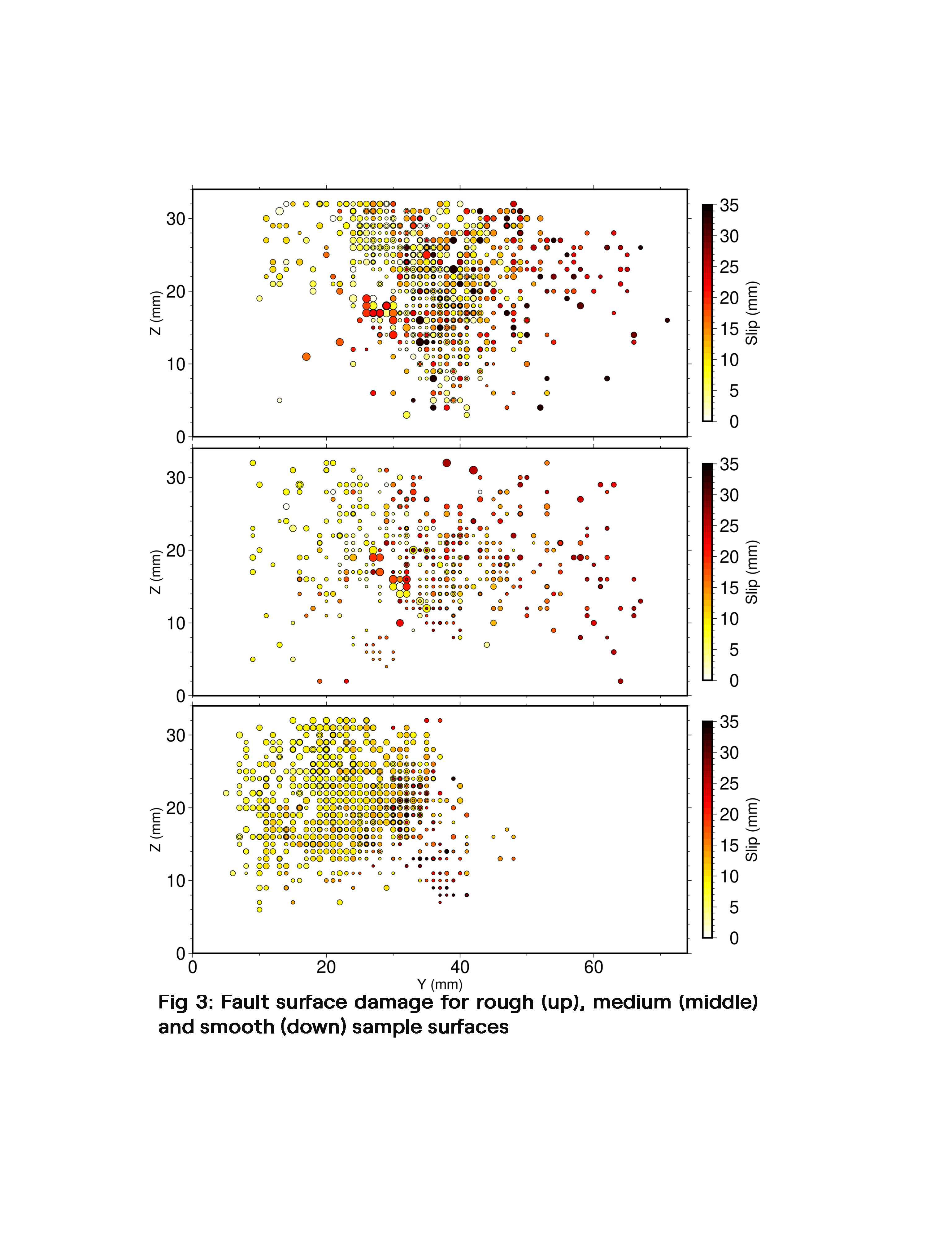
SIMORGH conducted a series of advanced laboratory experiments to investigate how fault surface roughness controls fault reactivation, slip stability, and microseismicity across the full seismic cycle. Using the HighSTEPS biaxial apparatus, SIMORGH performed load-controlled shear experiments on bare norite rock samples with systematically varied roughness, enabling spontaneous fault slip from locked conditions through slow slip, episodic instabilities, and runaway rupture. The experiments captured slip velocities spanning seven orders of magnitude, reaching up to ~80 mm/s on smooth faults and ~35 mm/s on rough faults. Through this work, SIMORGH demonstrated experimentally that roughness-induced stress heterogeneity acts as an effective barrier to rupture propagation, directly linking microscopic surface geometry to macroscopic fault stability.
Controlled biaxial shear experiments on bare rock surfaces with systematically varied roughness under constant normal stress.
Load-stepping single-direct shear experiments in the HighSTEPS apparatus. AE localization and relative magnitude analysis.
Demonstrates experimentally that fault roughness creates stress barriers capable of halting rupture, even after nucleation.
Laboratory-Scale Hydraulic Fracturing Monitoring
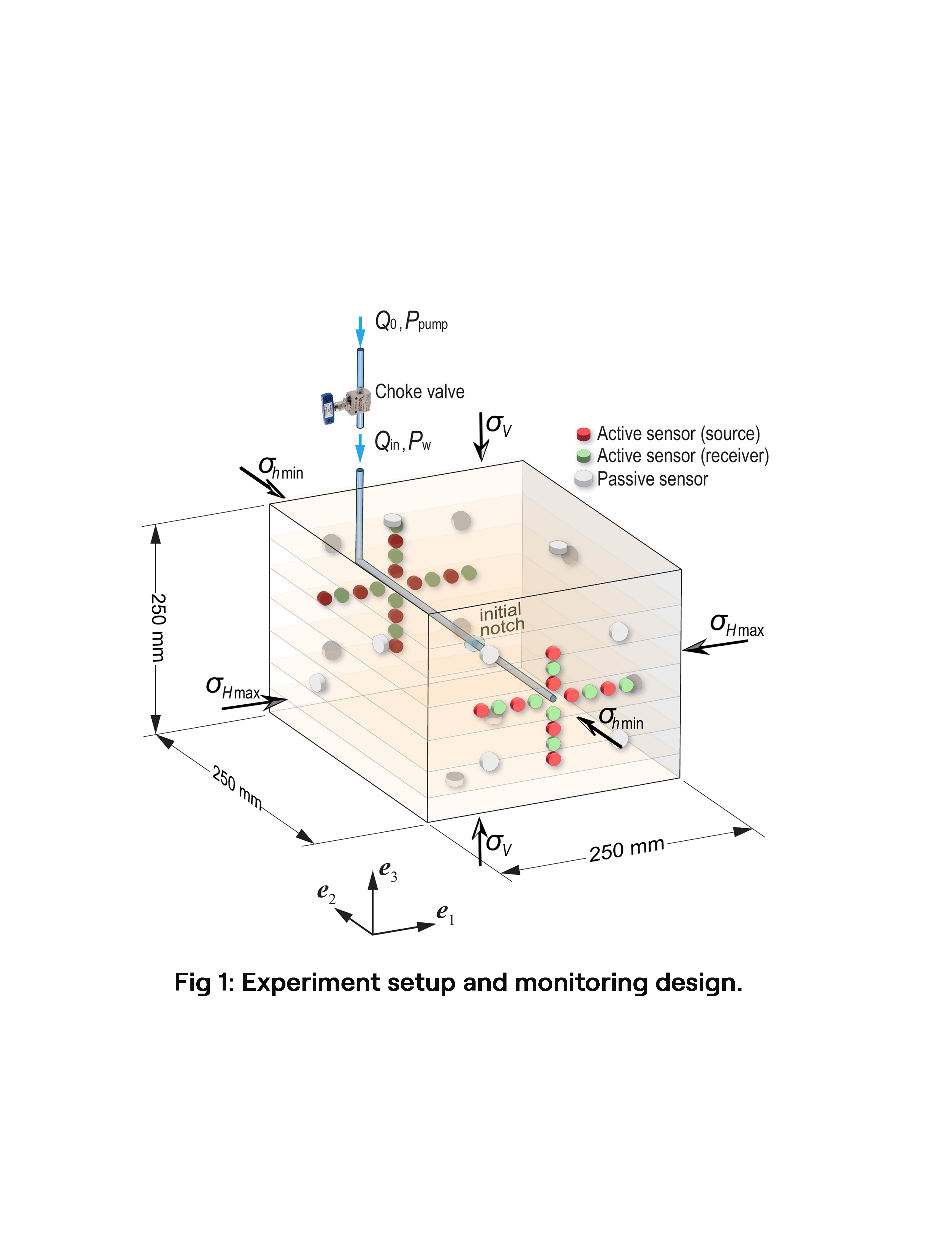
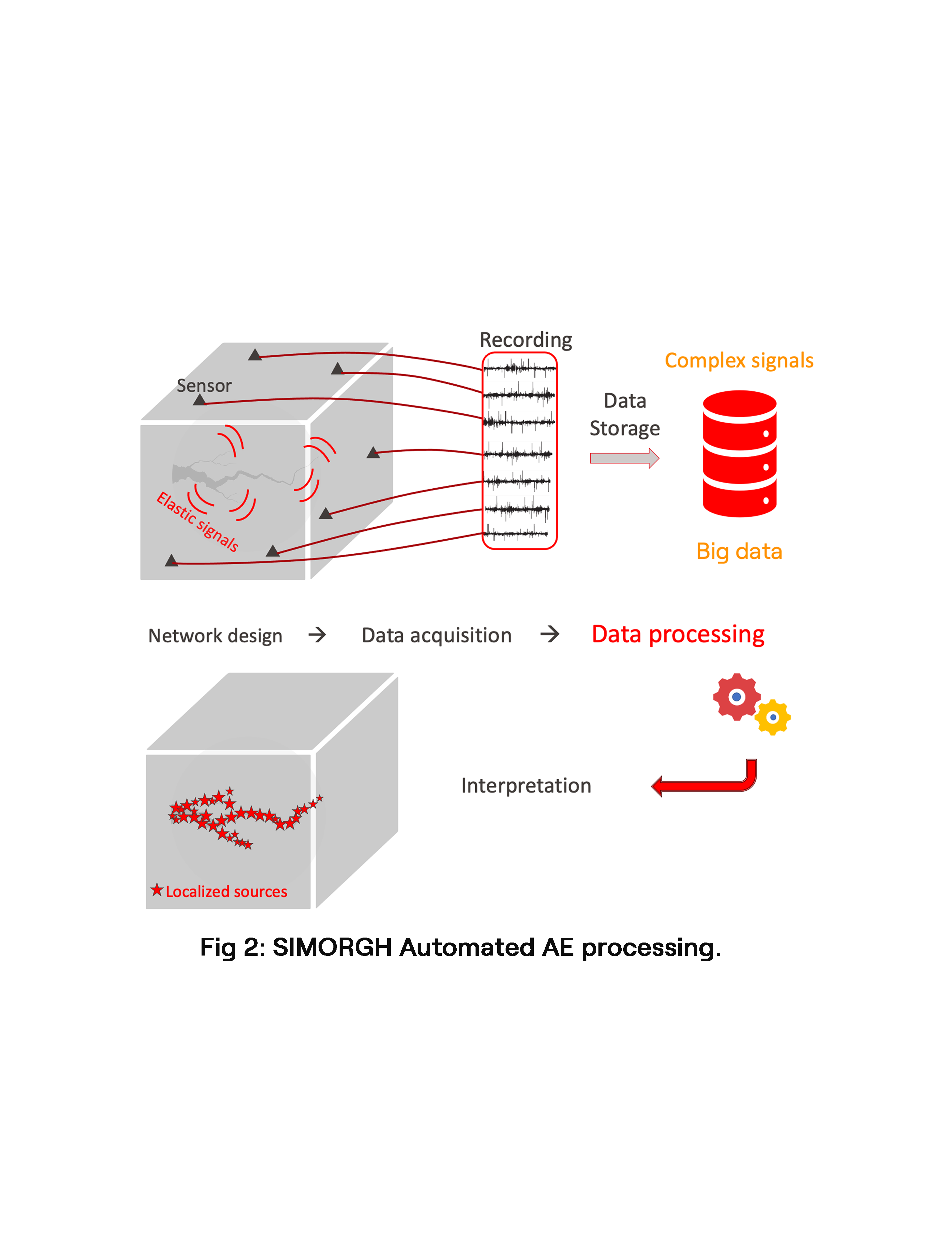
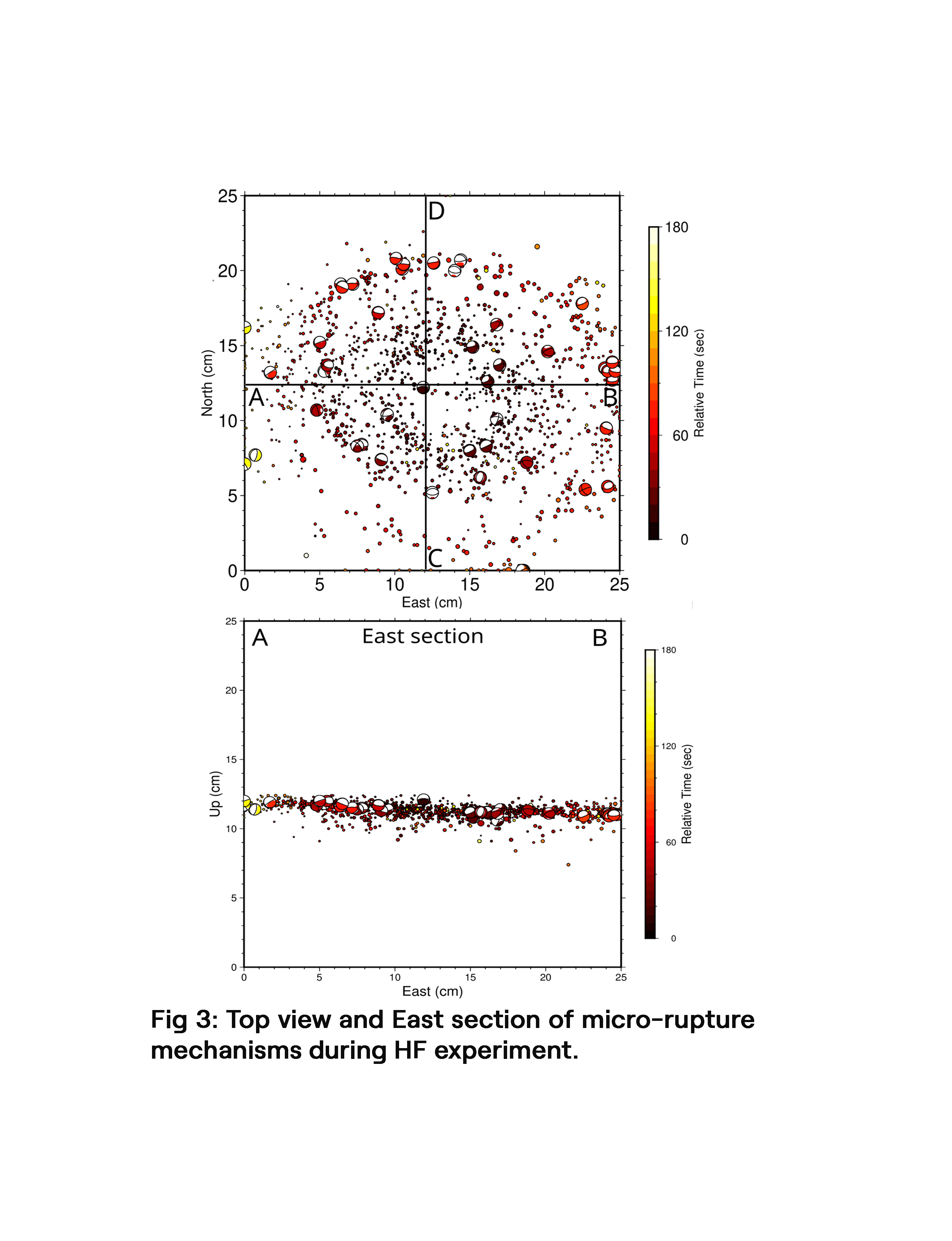
This case study demonstrates SIMORGH's automated acoustic emission (AE) monitoring for real-time crack tracking during laboratory hydraulic fracturing experiments. A 25 cm³ Zimbabwe Gabbro sample was fractured under true-triaxial stress at EPFL's Geo-Energy Laboratory, with 16 piezoelectric sensors recording ultrasonic data at 10 MHz, generating over 500 GB of waveforms. SIMORGH processed the full dataset automatically in ~20 hours on a standard laptop, detecting and localizing more than 4,800 AE events with sub-millimeter precision (≤3 mm error). SIMORGH's automated Moment Tensor Inversion module computed over 500 moment tensors, with more than 200 high-quality solutions. Results show that over 50% of events were dominated by shear mechanisms with opening or closing components.
High-frequency ultrasonic waveforms (MHz sampling) from multiple piezoelectric sensors, accurate sensor geometry, a P-wave velocity model.
Automated AE detection, association, and high-precision (mm-scale) source localization. Real-time moment tensor inversion.
Enables detailed tracking of hydraulic fracture geometry evolution and rupture dynamics in laboratory experiments.
Reinforced Concrete Beam SHM
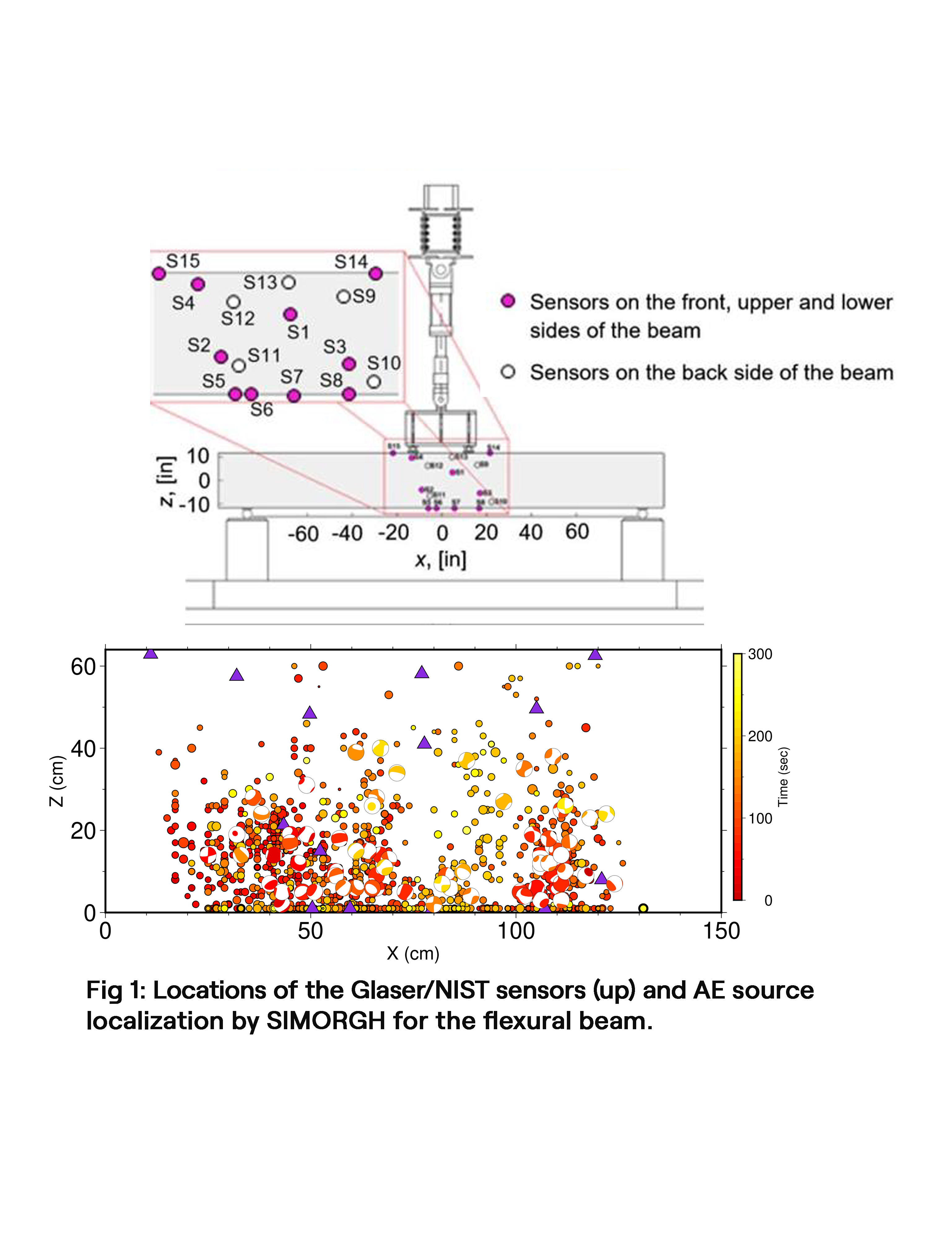
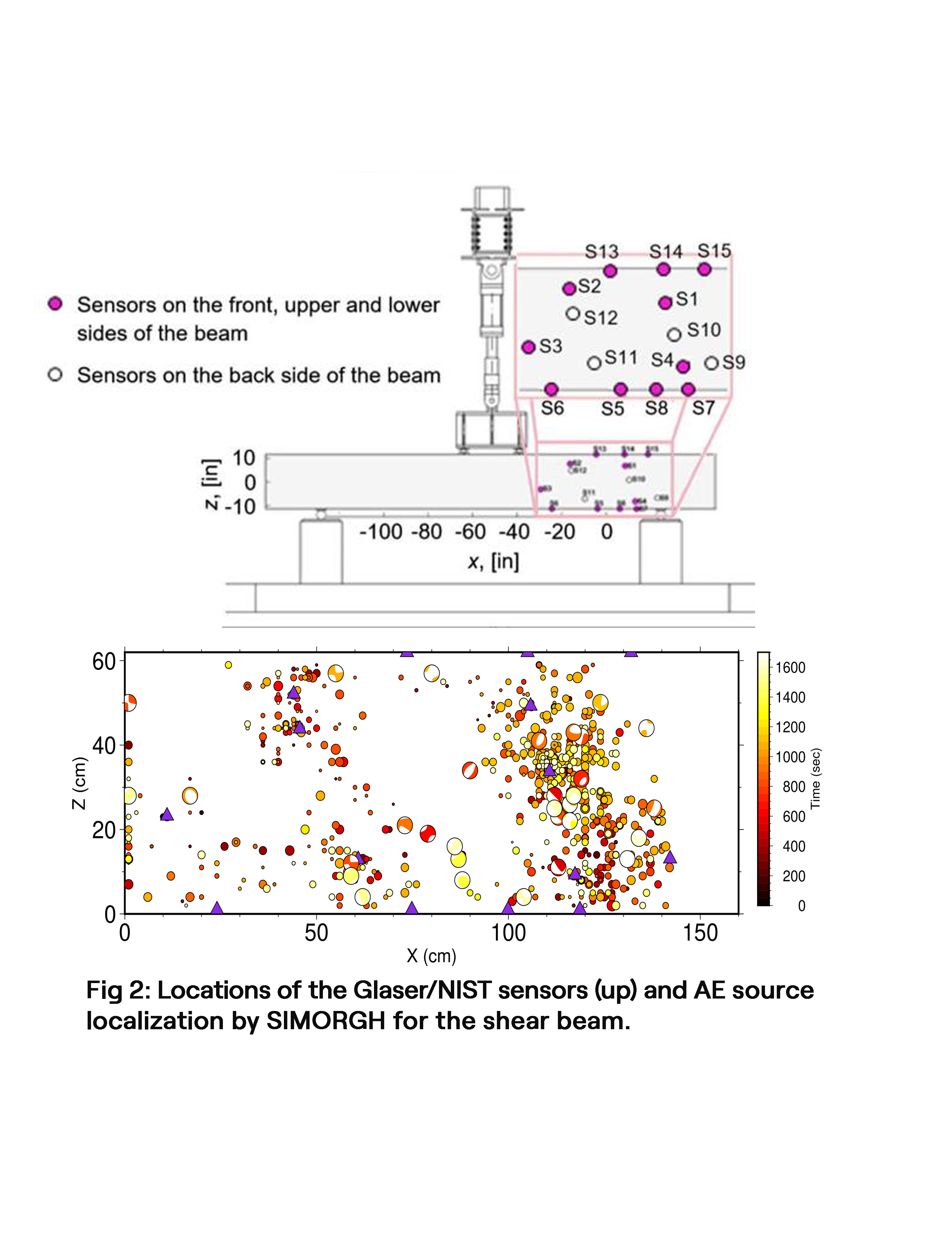
SIMORGH was deployed to automatically monitor and characterize damage evolution in two full-scale (4.88 m) reinforced concrete beams subjected to cyclic four-point bending tests. Using data from 15 calibrated AE sensors and a 16-channel, 10 MHz acquisition system, SIMORGH processed waveform features in both time and frequency domains and performed high-precision source localization and moment tensor inversion in near real time. Compared to manual processing, SIMORGH identified 3–10× more acoustic emission sources while maintaining comparable localization accuracy (≤ 51 mm standard deviation). For the flexural beam at 111 kN, SIMORGH localized 1,570 AE events versus 380 manually and computed 460 moment tensors, with 76 high-quality solutions constrained by ≥ 8 sensors.
High-frequency multi-channel AE data from loaded concrete structures, recorded with calibrated sensors and a known velocity model.
Automated acoustic emission source localization combined with time- and frequency-domain waveform analysis and moment tensor inversion.
Real-time, high-precision imaging of crack geometry and damage mechanisms in concrete structures.
Composite Beam SHM
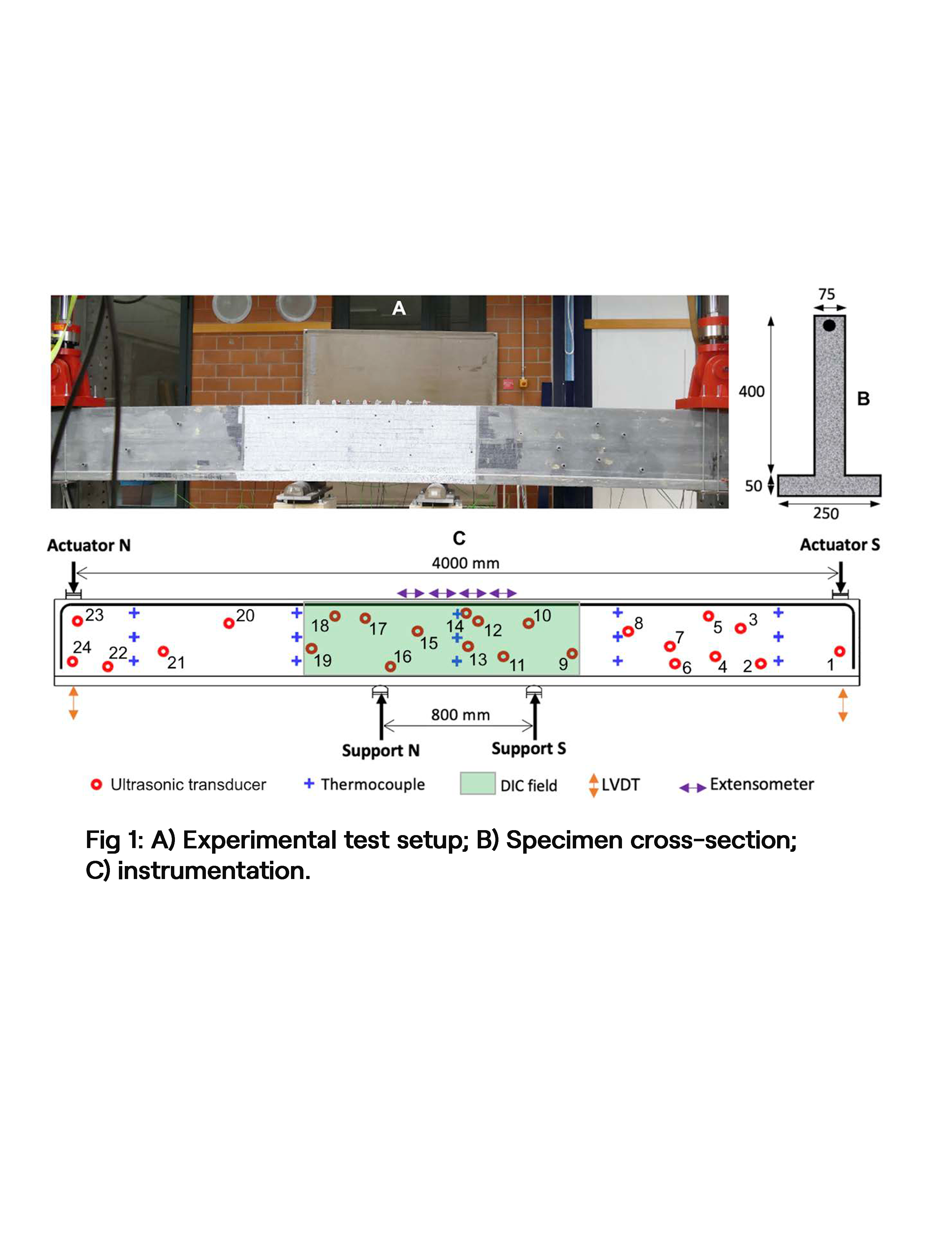
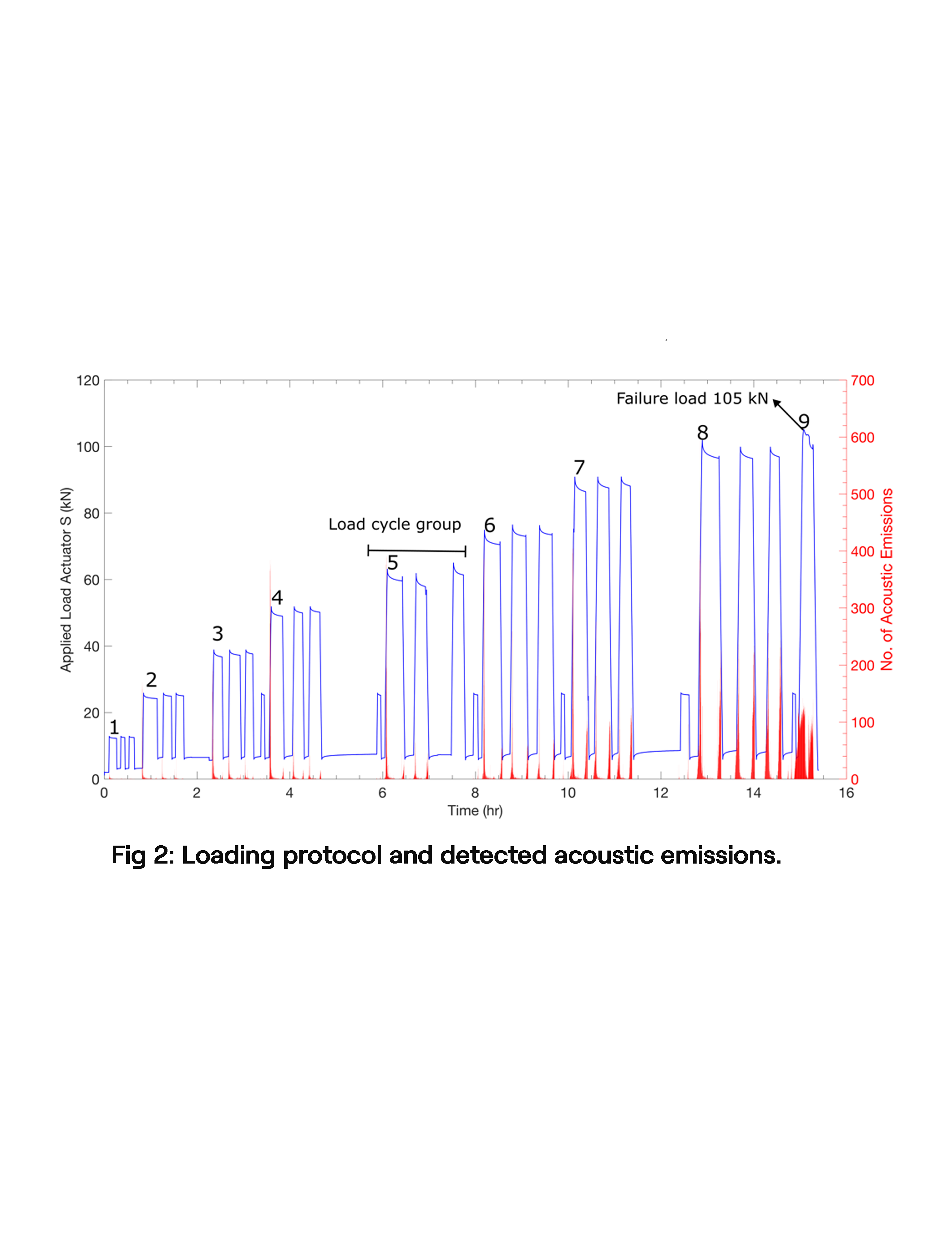
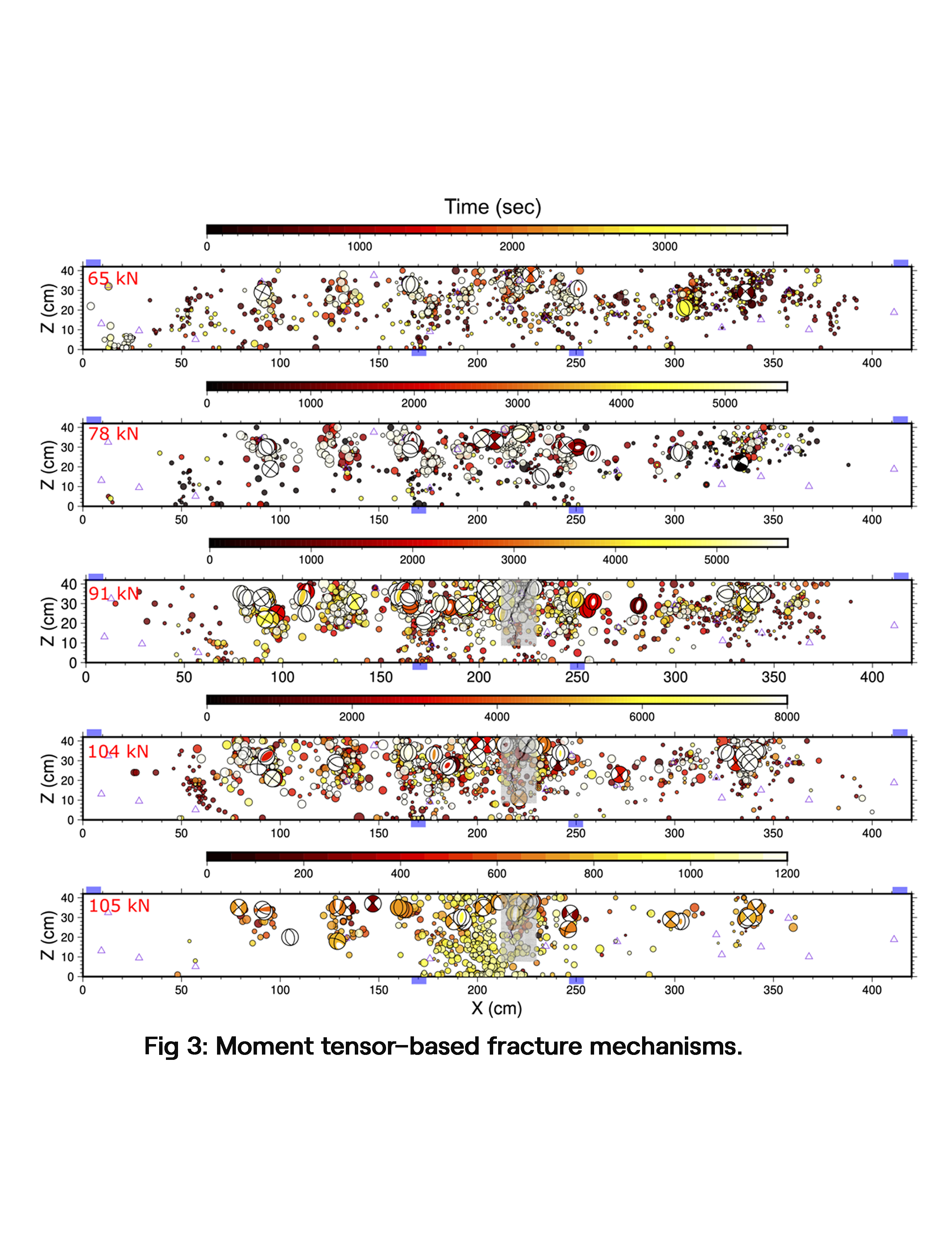
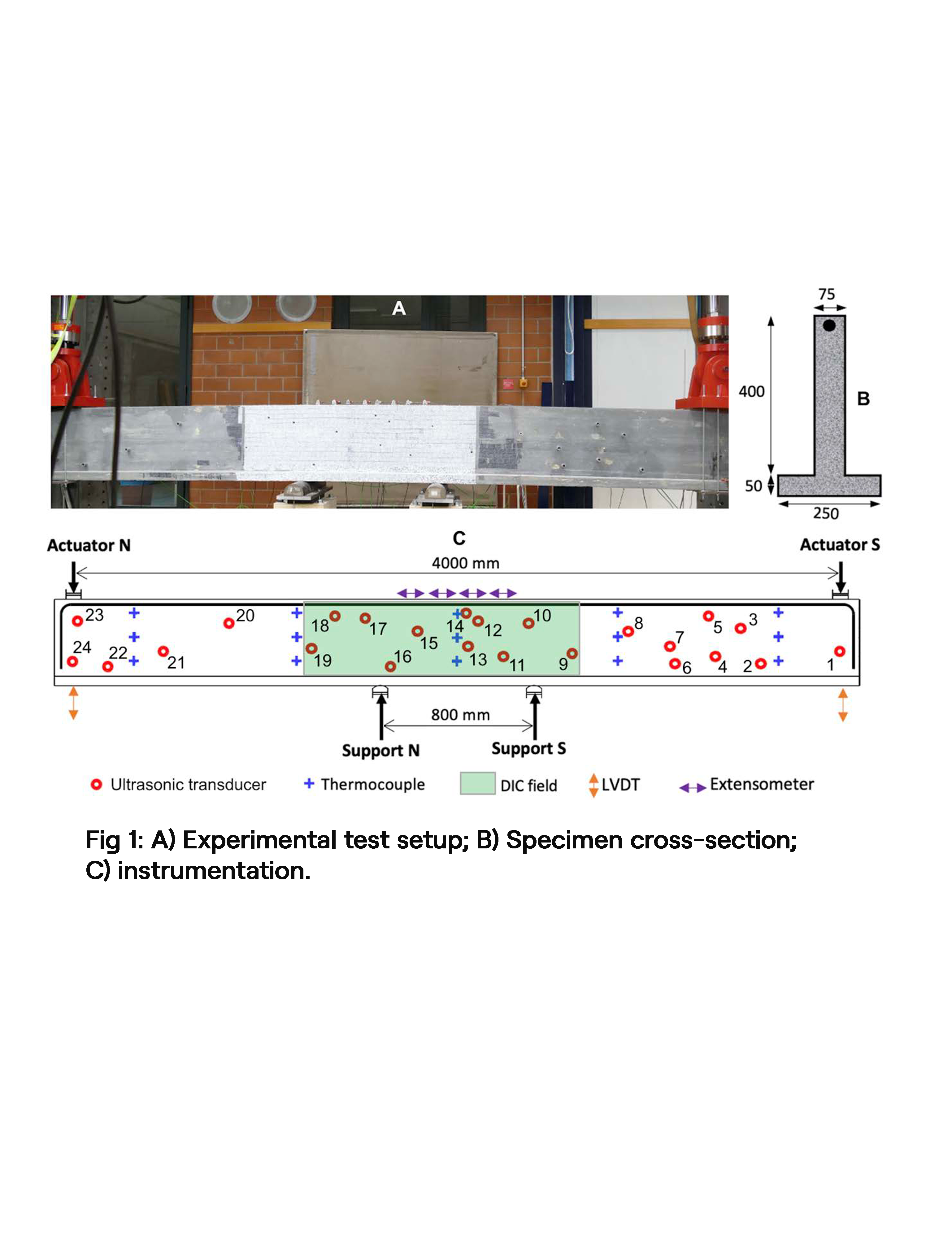
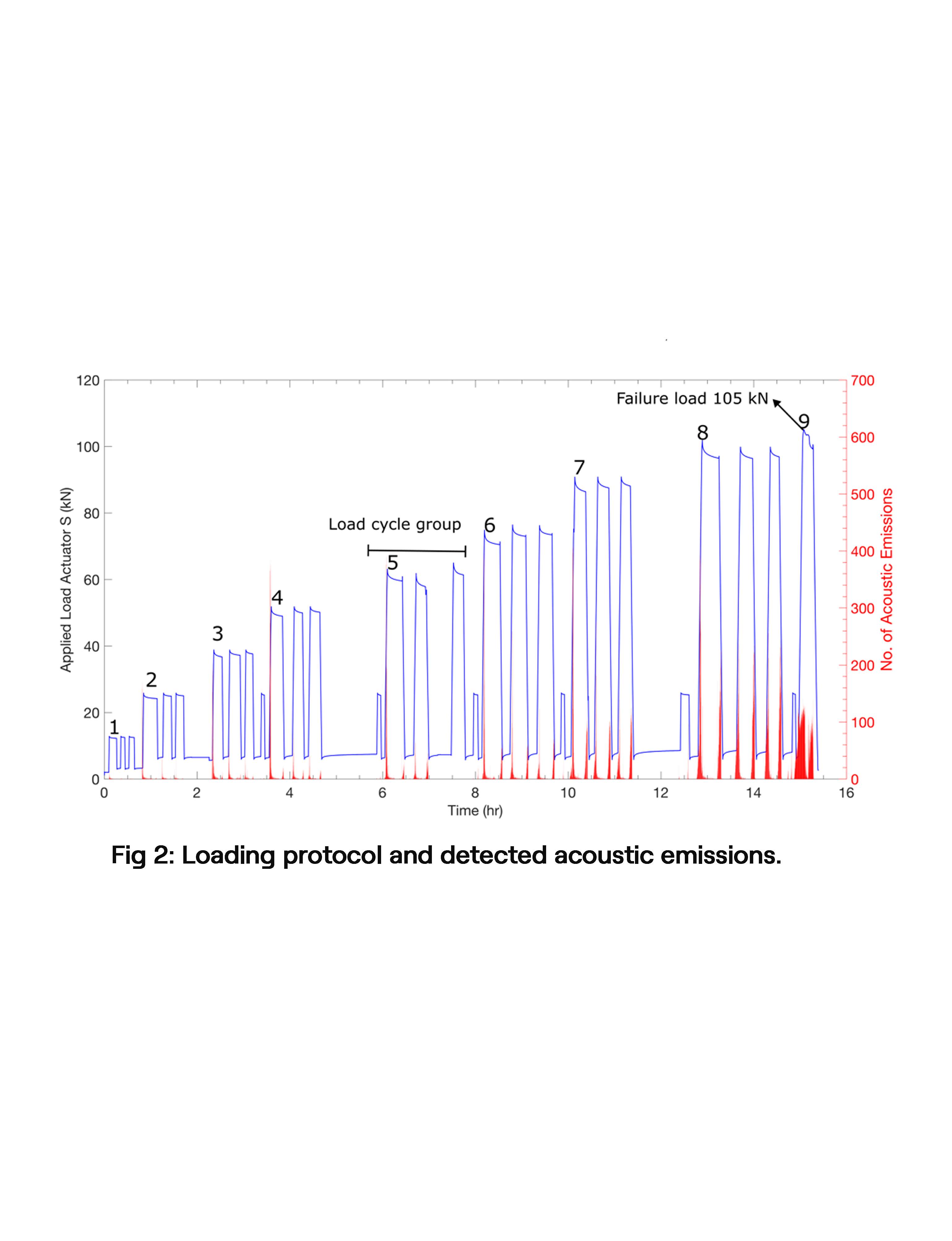
This case study demonstrates the application of SIMORGH-SHM for real-time structural health monitoring of a 4.2-m Ultra-High-Performance Fiber-Reinforced Cementitious Composite (UHPFRC) T-beam. The beam was tested under cyclic four-point bending to failure at EPFL and instrumented with 24 embedded ultrasonic transducers. SIMORGH-SHM overcomes the limitations of conventional AE analysis through fully automated AE event association, source localization, and fracture mechanism characterization in near real time. More than 3.5 million waveforms were processed, resulting in the localization of hundreds of thousands of AE events — over three times more than with traditional approaches.
High-frequency AE and ultrasonic waveform data recorded from multiple embedded transducers during cyclic loading.
Automated AE event association and source localization. Moment Tensor Inversion of AE first-motion polarities and amplitudes.
Near real-time, high-precision monitoring of crack initiation, propagation, and failure mechanisms in UHPFRC structures.
Composite Beam Tomography
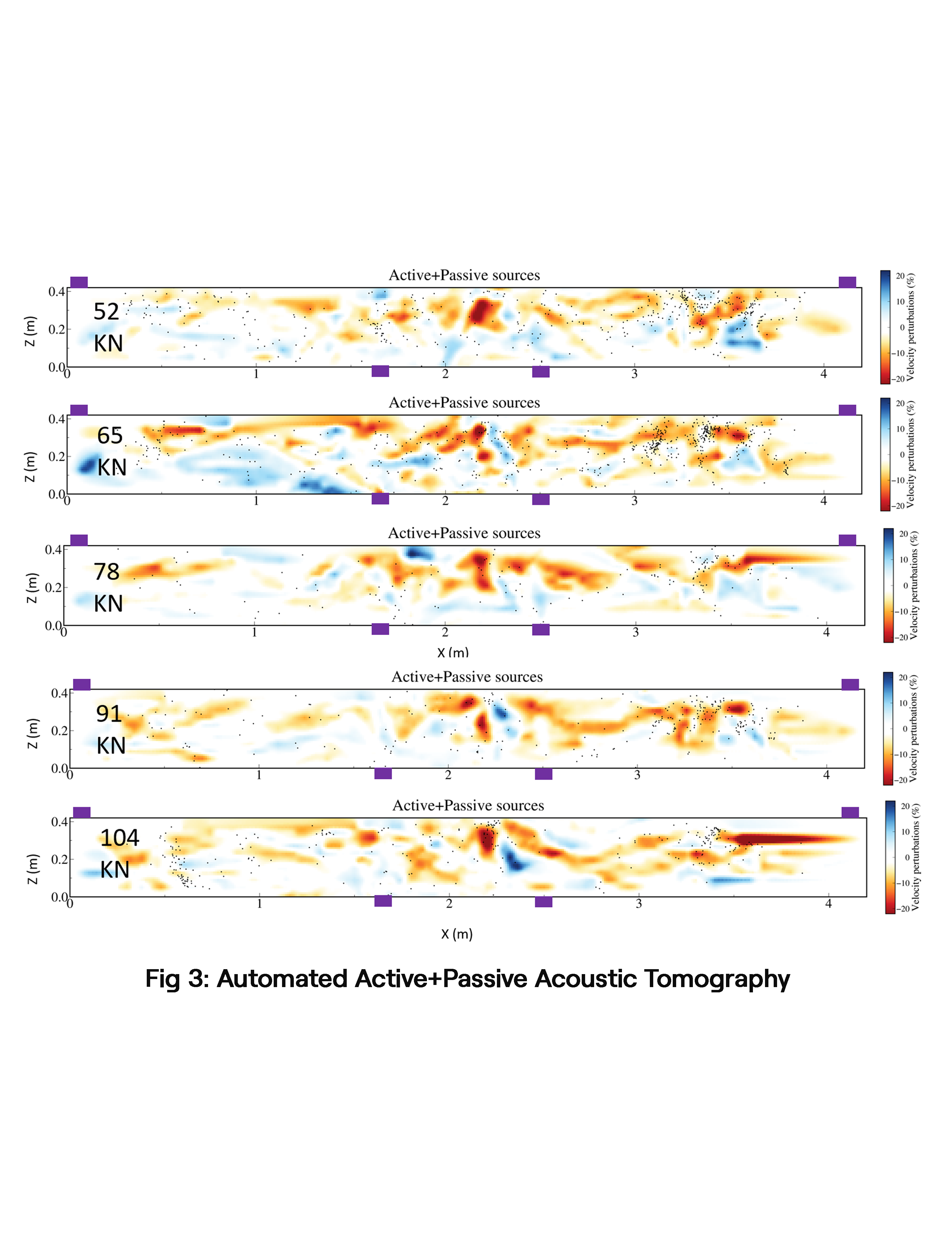
SIMORGH's automated joint active and passive travel-time tomography provides early damage detection in composite beam structures. This approach combines active ultrasonic measurements with passive acoustic emission monitoring to generate high-resolution velocity perturbation maps revealing internal structural changes. The fully automated algorithm performs joint AE re-localization and velocity model calculation using adaptive grids (2 cm, 1 cm, 0.5 cm resolution), detecting macro-cracks far before they appear on digital image correlation (DIC) measurements. Optimized for real-time operation, each tomographic reconstruction completes in under one minute, enabling continuous monitoring throughout loading cycles.
High-frequency AE and active ultrasonic data from embedded transducers. Precise transducer geometry and coordinates.
Detects macro-cracks through low-velocity anomalies before DIC visualization. Automated processing reduces costs.
Structural health monitoring of composite beams, bridges, and critical infrastructure.
Passive Seismic Imaging, Brady Geothermal Field, Nevada
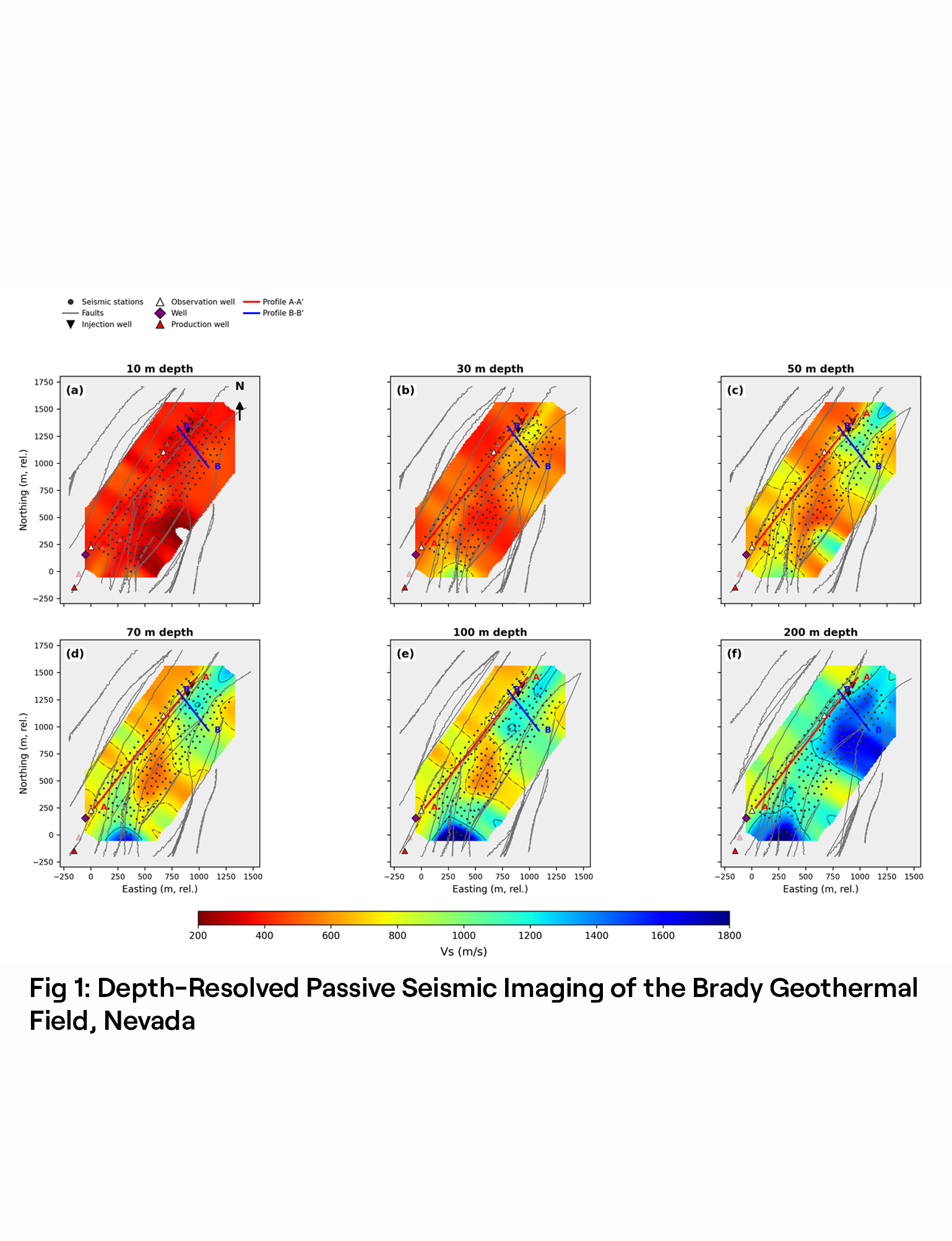
Using ambient seismic noise from a dense nodal array, Simorgh's passive imaging workflow inverts surface-wave data into a 3D shear-wave velocity model of the Brady geothermal field. Fig. 1 shows the model as depth slices (10–200 m): a low-velocity sedimentary cap (Vs < 500 m/s) blankets the array to ~30 m, giving way to a well-defined high-velocity body (>1400 m/s) near the injection wells by 300 m. Faults recovered directly from the model, together with well locations, are overlaid at every depth. In the northern array, individual fault strands separate cleanly, with injection wells sitting right at the fault-zone margin, where flow paths concentrate. The central low-velocity zone also lines up with InSAR-confirmed ground subsidence at the site, consistent with soft, fluid-saturated ground responding to reservoir pressure changes at depth.
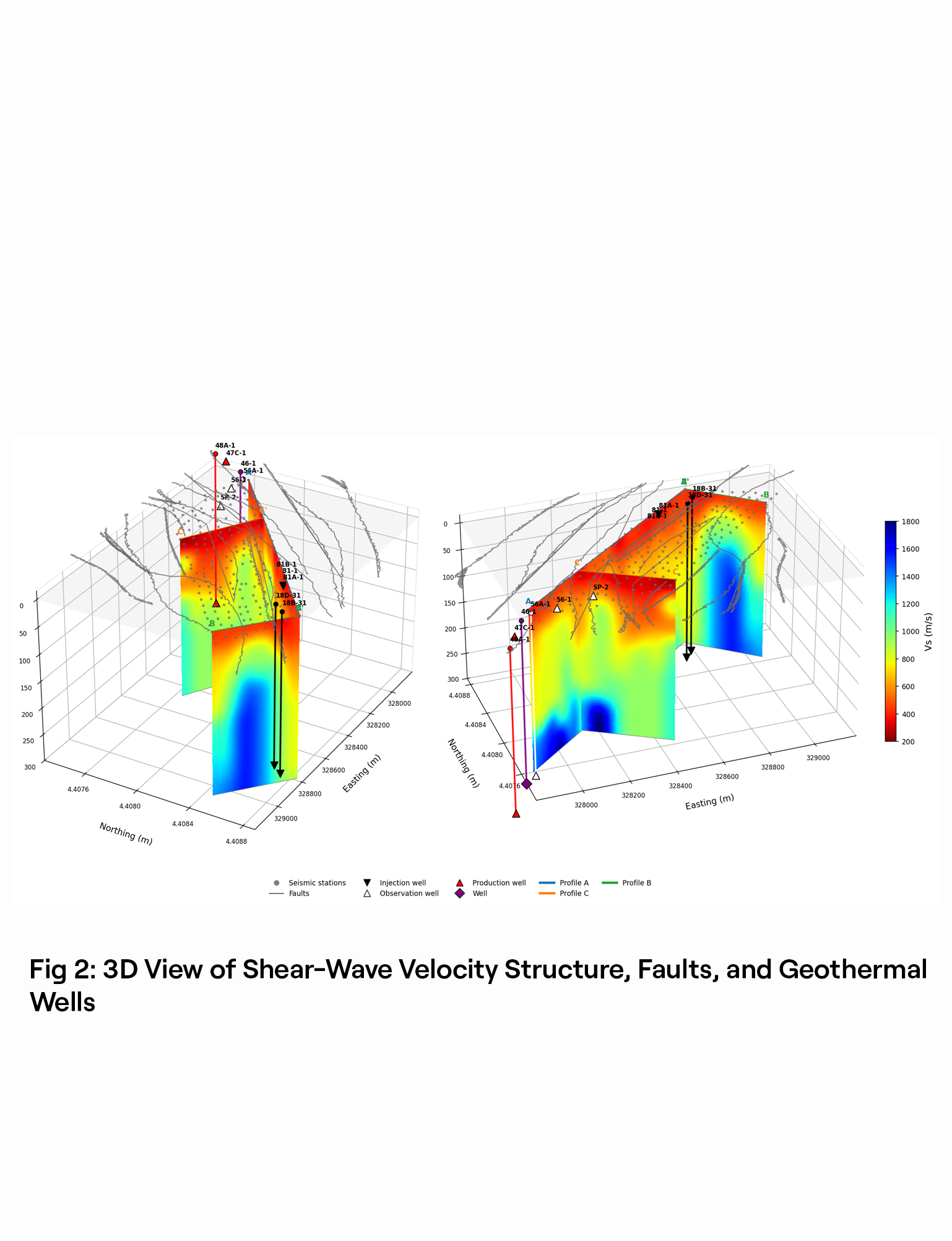
Fig. 2 moves from flat horizontal-sections to a 3D scene, carrying cross section profiles, the array's stations, recovered faults, and every well through together. Shown from two viewing angles to convey the full geometry, it lets the high-velocity body seen in Fig. 1 be traced directly across all sections at once and shows exactly how each profile's wall meets the fault network and the injection-well cluster in true spatial relation to one another, with the injection wells sitting right at the edge of the fault.
Together, these figures deliver a fully 3D, site-wide picture of fault geometry, velocity structure, and their relationship to injection targets and surface deformation, from passive recordings alone, with minimal environmental footprint.
Continuous passive seismic recordings from a dense nodal array. Station metadata and precise coordinates.
No active sources or earthquakes required. Short deployment periods (days to weeks) sufficient for near-surface characterization.
Shallow subsurface and reservoir characterization for geothermal exploration, fault and fracture-zone mapping, joint SPAC/FK dispersion and HVSR inversion for depth-resolved Vs models.
Ambient Noise Tomography
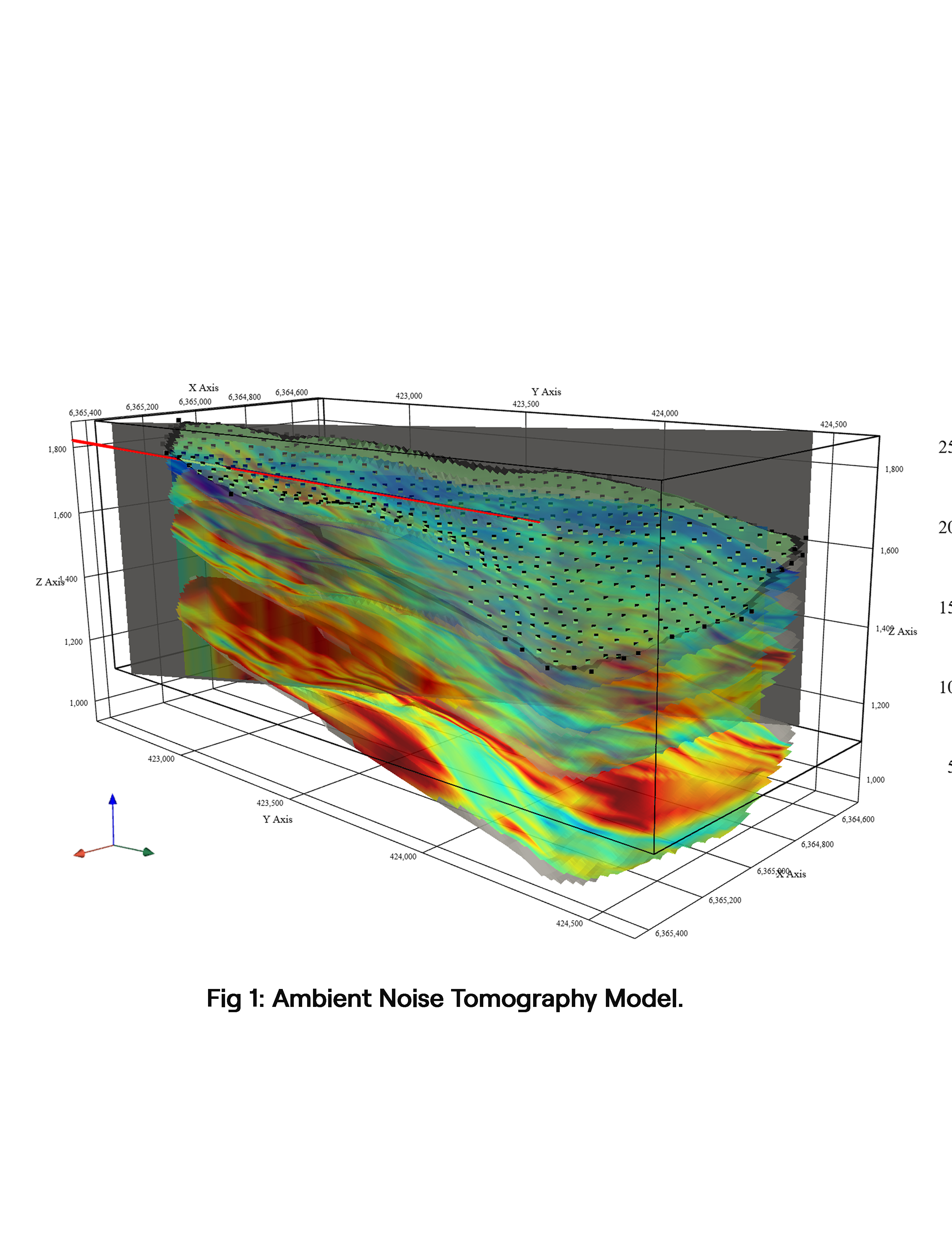
SIMORGH's Ambient Noise Tomography delivers high-resolution subsurface imaging from shallow crustal levels to several kilometers depth using continuous passive seismic data. By cross-correlating ambient noise recordings between station pairs, empirical Green's functions are retrieved without earthquakes or active sources, enabling reliable imaging even in low-seismicity regions. Surface-wave dispersion measurements from noise correlations are automatically inverted to generate 2D and 3D shear-wave velocity (Vs) models. These models resolve basin architecture, sediment thickness variations, deep velocity contrasts, and structural boundaries. Results integrate seamlessly with SIMORGH's HVSR and micro-array workflows.
Continuous passive seismic recordings from distributed seismic networks. Station metadata and precise coordinates.
No active sources or earthquakes required. Short recording periods sufficient for rapid assessments.
Basin characterization, crustal imaging for geothermal and mining exploration, multi-scale integration with HVSR.
Fluid-Injection-Driven Fault Slip
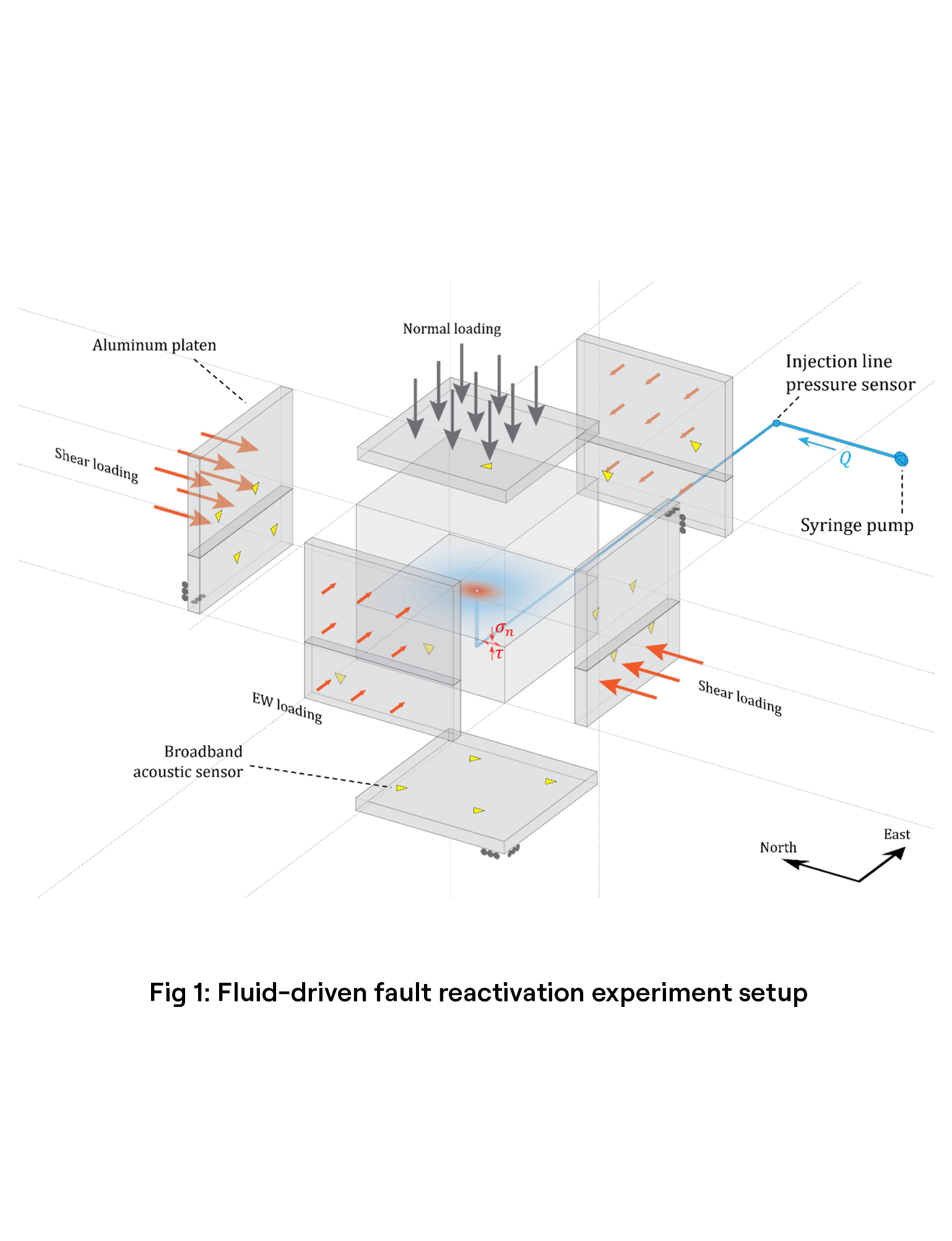
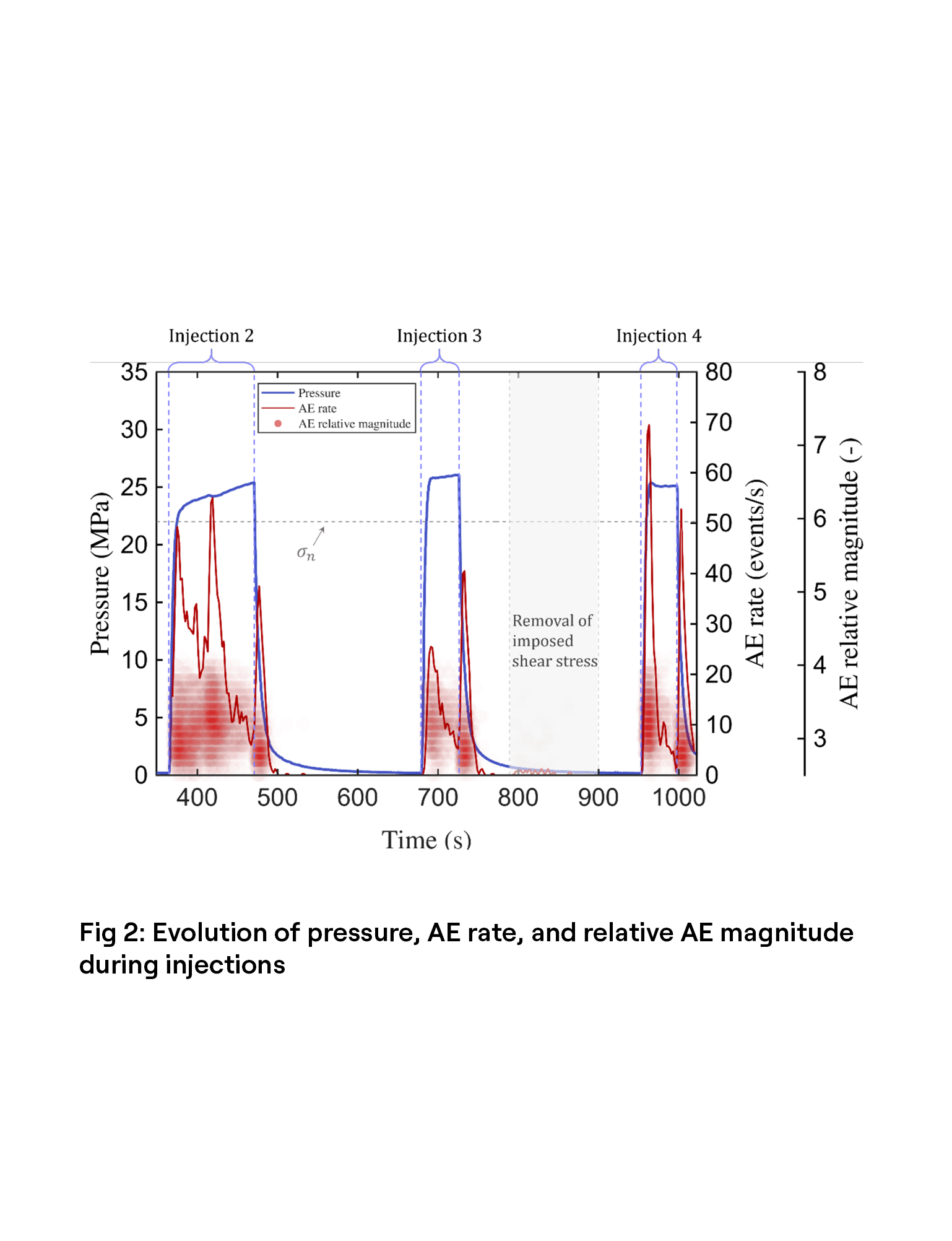
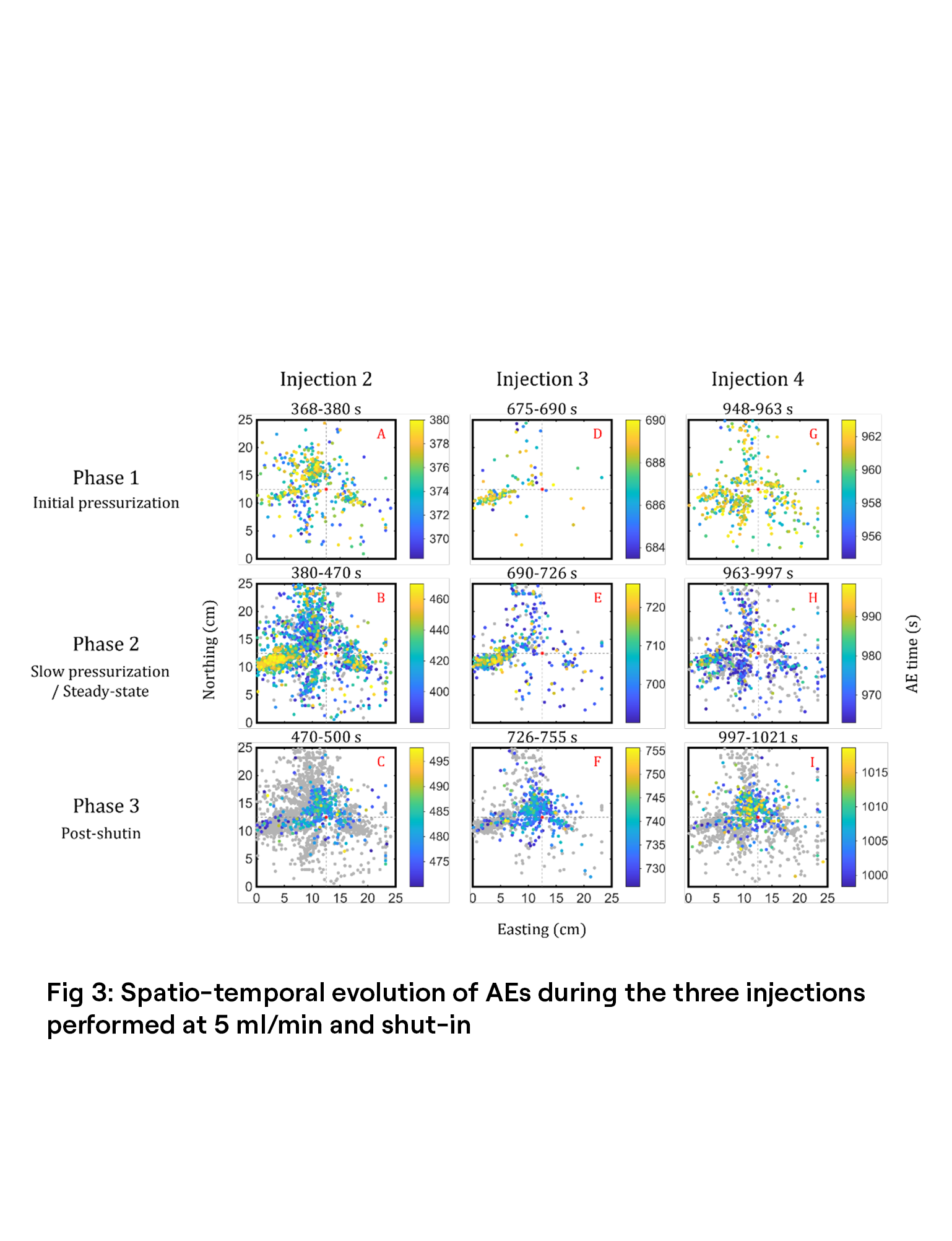
This case study demonstrates SIMORGH's automated acoustic emission (AE) monitoring of fluid-driven fault reactivation in a laboratory experiment at EPFL's Geo-Energy Laboratory. Two Zimbabwe Gabbro blocks forming a pre-stressed interface were subjected to repeated fluid injections while 16 broadband sensors continuously recorded at 10 MHz, generating ~1 TB of data. SIMORGH automatically localized AE activity across the dataset, revealing clear differences in event productivity and spatial pattern between successive injections, consistent with irreversible slip and contact evolution, with post-shut-in events consistently relocalizing near the injection point as the interface closed.
Continuous AE waveforms from broadband piezoelectric sensors, sensor geometry, and a rock velocity model.
Automated AE detection, phase picking, event association, and high-precision source localization across the full dataset.
Monitoring fault activation and interface closure for geothermal, subsurface injection, and induced-seismicity applications.